The true ‘value’ of injection therapy

There’s no doubt about it. Injection treatment is expensive. But have you calculated the true value of having an injection? We’re not embarrassed about the cost (and we’ll explain why) but we understand that there’s a big jump from what you’re used to paying for your physiotherapy treatment. So let me explain…
It’s beyond the scope of ‘normal’ physio
Injection treatment is a specialist service. Whilst you are receiving treatment from physiotherapists, injection therapy is considered to be part of what the profession calls ‘extended scope’. In other words, it is not part of usual physiotherapy and not every physio is qualified to do it. This is because it requires a huge amount of additional training (see the next point), compliance, high-tech equipment and insurance to practice safely and effectively.
There’s a lot more training involved
To become a qualified injection therapist the training is long and intense! You can get a good idea of what’s include by checking out either of these courses organised by The Sports Medicine Ultrasound Group and Brunel University. It usually takes over 2 years to qualify with assignments, practical supervision and exams. Johnny Cassidy has completed his injection training and was awarded PG Cert in Ultrasonography with distinction in 2025. Paul Hattam has trained over 2000 doctors and physios in injection therapy during his career and introduced ultrasound guided techniques to the practice in 2017 following extensive training in Norway and London. Add to that another year training to be a non-medical prescriber (so we can obtain the necessary medications) and you’ll start to get the picture!
Sometimes one injection is not enough
Quite often our patients need more than one procedure – maybe both knees need an injection for example. If that’s the case we’ll try and do up to two procedures in one appointment which can make the treatment more economical.
Not all injections are the same
Cortisone and HA injections are delivered in our normal injection clinic but others (PRP and CM) need the involvement of a doctor. Yep, you’ve guessed it – we have to pay the doctor – so those injections do cost more.
We invest in the best equipment
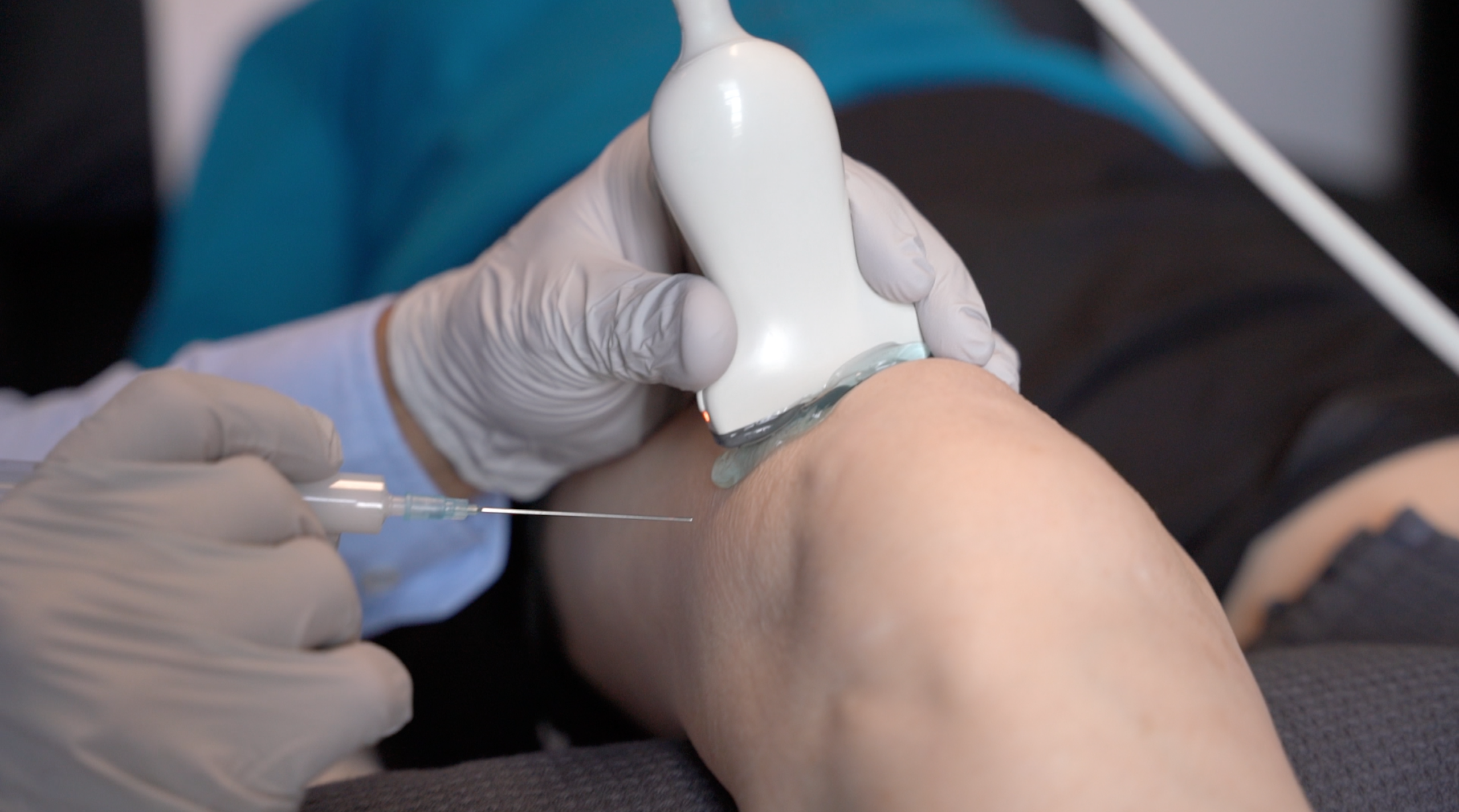
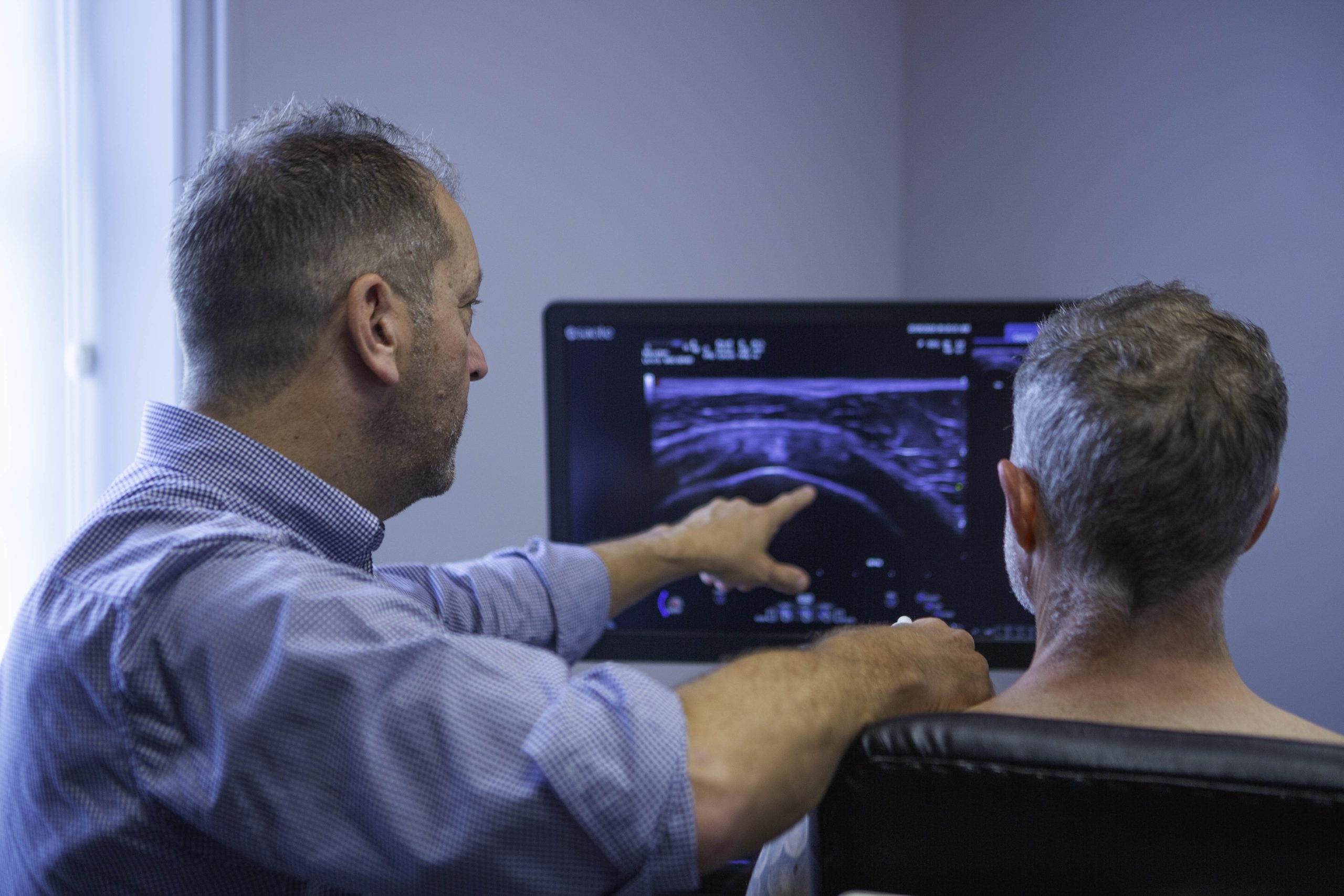
Then there’s the equipment. Ultrasound machines don’t come cheap but we believe in providing the best care possible by improving safety and accuracy for every procedure. There was a time when injections were given without guidance but the world has moved on (a lot!) and ultrasound technology has revolutionised injection techniques – not only enabling us to identify abnormalities that were previously unseen, but also target tissues very specifically.
Doubling up
Our injection clinics are scheduled to run with two senior clinicians – Paul Hattam and Johnny Cassidy usually. There are a number of reasons for this – not least because there’s a lot to do! Detailed assessment, record keeping, treatment planning, ultrasound scanning, injection delivery, post-injection advice… the list goes on! Primarily it’s about our patients’ safety and to streamline the procedure as much as possible – but there’s no getting round it – doubling up inevitably increases the costs of injection treatment. [During holiday times and where we’ve squeezed you in somewhere you might have just one of us but we always allow plenty of time to make sure everything goes according to plan].
‘In’suring you’re safe
Whilst the risk of complications from an injection are infinitesimally small, the insurers don’t miss an opportunity to increase a premium when they get half a chance and this has led to a near doubling in our insurance costs. We know that’s part and parcel of being compliant and keeping our patients safe – but it’s another thing that makes an injection more expensive.
Okay – so there are the boring bits about why the treatment costs more. But have you ever thought about the true value of injection therapy?
It’s often the best choice
There’s nothing like stating the obvious but sometimes it’s the one treatment that you really need. It can be like needing a filling but choosing to avoid the dentist! There are quite a few conditions that respond really well to injection treatment like osteoarthritis (affecting the knee, hip, ankle, thumb and shoulder), SAPS, tenosynovitis, GTPS, trigger finger and carpal tunnel syndrome to name a few. In some cases injection treatment is the clear favourite in terms of reduction in pain and improvement in day to day function.
Quick response
No one likes to be in pain and injection therapy often alleviates pain quickly. That doesn’t mean it’s the end of the problem but it can save you weeks of unrelenting pain. Once the pain is under control there’s a chance of improving strength and your day to day activities. We often use the pain relief gained from an injection to accelerate our patient’s rehabilitation which is a massive boost and enables people to really feel like they’re making progress.
Improving your quality of life
A while back there was a study comparing a group of people who had injection treatment for tennis elbow with a group who had no treatment at all. The study concluded that in the longer term (after 1 year) the outcome was the same. In other words, in the longer term (>1year) it doesn’t make a scrap of difference whether you have an injection or not. That all sounds straight-forward doesn’t it? The problem with this (and you’ll know this if you’ve ever had tennis elbow) is that Tennis elbow is very painful and disabling and it often lasts the best part of a year! The researchers completely failed to measure the benefit to the patient for the duration of the condition! It can make a massive difference to your quality of life for a significant amount of time.
Longer lasting than you think
“How long will I benefit from this injection?” That’s the million dollar question we get asked all the time. Well the truth is – it varies quite a bit depending on the condition we are injecting, the demand on the area after the injection etc. There’s also differences in what is being injected. Cortisone can be quite short-lived although if it is able to curtail the inflammation causing the pain, its effects can last for months. HA has less dramatic effects early on but often provides months, if not years of relief for the patient.
Being in pain costs too
This is a calculation few of us do when we’re in pain but time off work, reduced productivity, paying for extra help and pharmacy bills all adds up and probably hinders your path to effective treatment. There’s also the loss of activities you love to do which can make being in pain pretty miserable. We’ve all done it but there is a cost to being in pain – and it’s not just financial!
Saved from fruitless treatment
The number of times a patient has arrived with a long history of all the treatments they’ve tried up to that point. Endless visits to their GP, X-rays, chiropractors, osteopaths and physios – all getting nowhere fast. Our success is built on trust with our patients. We don’t offer treatment we know isn’t going to help so if you’ve been offered an injection, we’re expecting it to help and start the journey back to recovery.